
Coastal environments are increasingly exposed to erosion, storm surges, and rising sea levels. As a result, engineers are turning to geotextile solutions as a sustainable and highly effective method for shoreline protection and marine infrastructure stabilization.
These solutions are widely used in coastal engineering because they are adaptable, cost-efficient, and environmentally friendly compared to traditional rigid structures.
What Are Geotextile Solutions?
Geotextile solutions refer to engineered permeable textiles used in marine, coastal, and civil engineering applications to interact with soil and water. They are designed to:
- Stabilize soil and sediments
- Control erosion
- Filter water while retaining soil particles
- Reinforce coastal and river structures
- Support marine construction projects
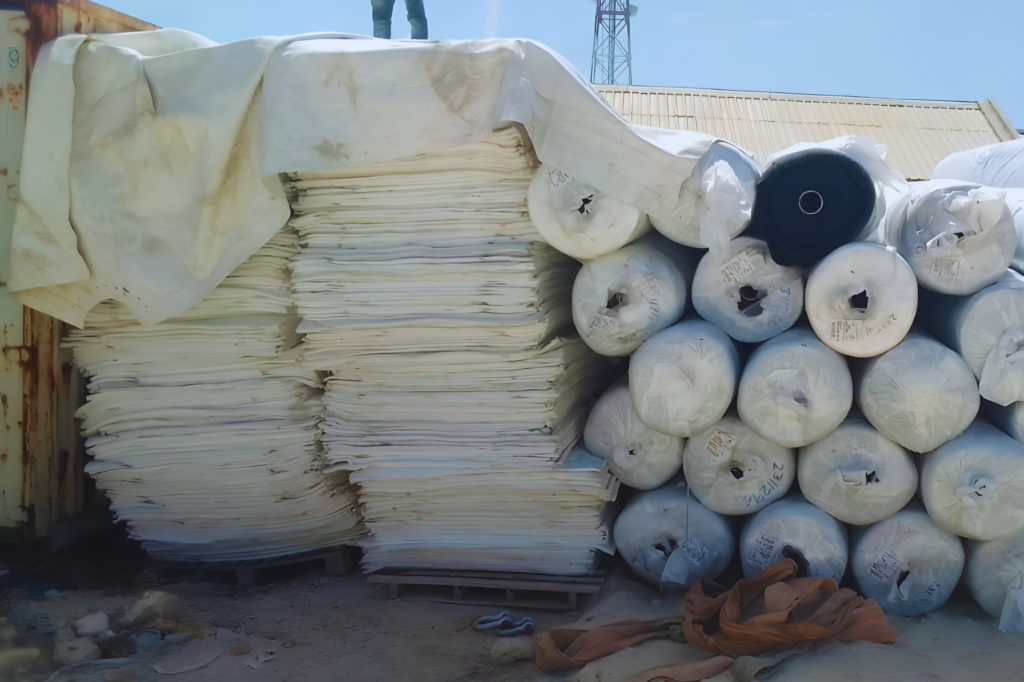
These materials are typically divided into two main categories: woven geotextiles and non-woven geotextiles.
Woven Geotextiles
Woven geotextiles are manufactured by weaving synthetic fibers (usually polypropylene or polyester) into a structured, grid-like pattern.
Key Characteristics:
- High tensile strength
- Low elongation (minimal stretching)
- Excellent load-bearing capacity
- Strong soil reinforcement properties
Main Applications:
- Shoreline reinforcement structures
- Retaining walls and embankments
- Road and foundation stabilization near coastal zones
- Heavy-duty geotextile tube and geobag filling applications
Advantages:
Woven geotextiles are ideal where structural strength and stability are the primary requirements. They perform exceptionally well in high-load environments such as coastal protection bunds and breakwater foundations.
Non-Woven Geotextiles
Non-woven geotextiles are produced by bonding fibers together through needle-punching, heat, or chemical processes, creating a felt-like structure.
Key Characteristics:
- High permeability (excellent drainage)
- Superior filtration properties
- Flexible and soft texture
- Good conformability to uneven surfaces
Main Applications:
- Silt curtains for sediment control
- Drainage layers in coastal and marine structures
- Filtration in revetments and shoreline protection systems
- Erosion control under layers of rock or sand
Advantages:
Non-woven geotextiles are ideal for filtration and drainage applications. They allow water to pass through while preventing fine soil particles from being washed away, making them essential in erosion control systems.
Geotextile Applications in Shoreline Protection
Geotextile solutions play a critical role in modern coastal engineering projects, including:
- Geotextile tubes (geotubes) for artificial reefs and breakwaters
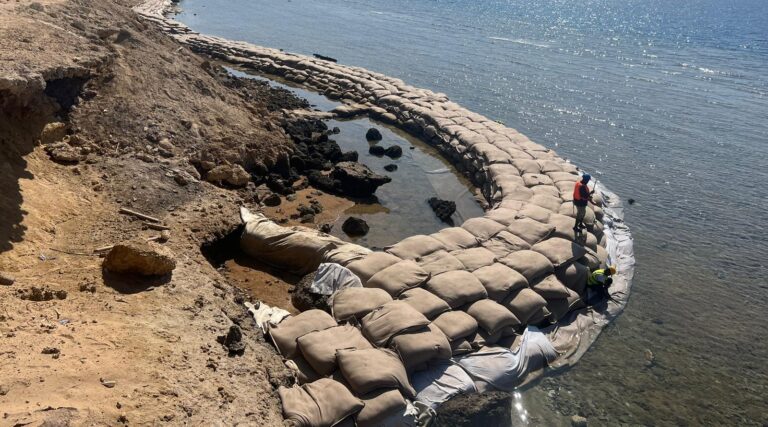
- Geobags for shoreline reinforcement and erosion control
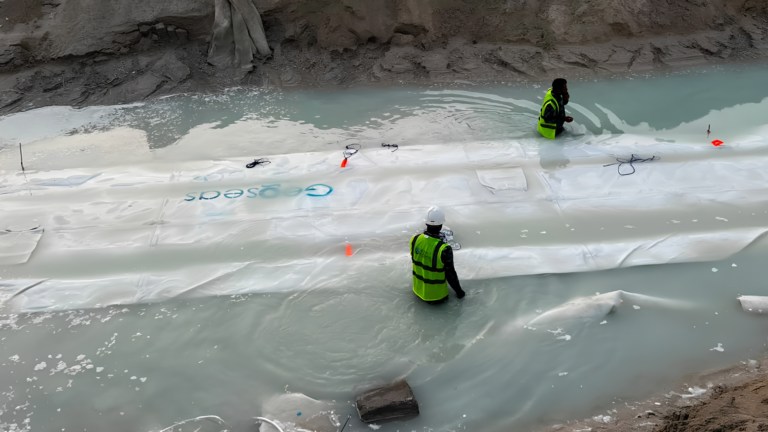
- Silt curtains for sediment containment during marine works
- Coastal revetments and embankment stabilization
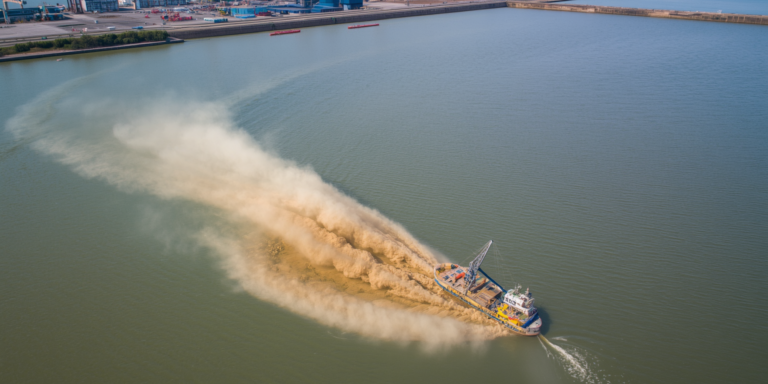
- Beach nourishment and restoration projects
By combining woven and non-woven geotextiles, engineers can achieve both structural stability and environmental filtration in a single system.
Environmental Benefits of Geotextile Solutions
Beyond engineering performance, geotextile systems support sustainable coastal development by:
- Reducing the need for concrete seawalls
- Minimizing disruption to marine ecosystems
- Encouraging natural sediment movement and beach regeneration
- Supporting vegetation growth in stabilized coastal zones
This makes them a key component of modern eco-friendly coastal protection strategies.
Geoseas Geotextile-Based Coastal Solutions
At Geoseas, geotextile technologies are integrated into advanced marine protection systems such as:
- Geotubes for shoreline stabilization and wave attenuation
- Geobags for flexible coastal reinforcement
- Silt curtains for sediment control during marine construction
- Geocontainer systems for breakwaters and erosion control
These solutions combine engineering strength with environmental responsibility, helping protect coastlines while preserving natural marine ecosystems.
Conclusion
Geotextile solutions, both woven and non-woven, are transforming shoreline protection by offering flexible, durable, and sustainable alternatives to traditional coastal structures.
By selecting the right type of geotextile for each application, engineers can create resilient coastal systems that protect infrastructure while working in harmony with nature.