
And How Geoboom Silt Curtains Control Turbidity
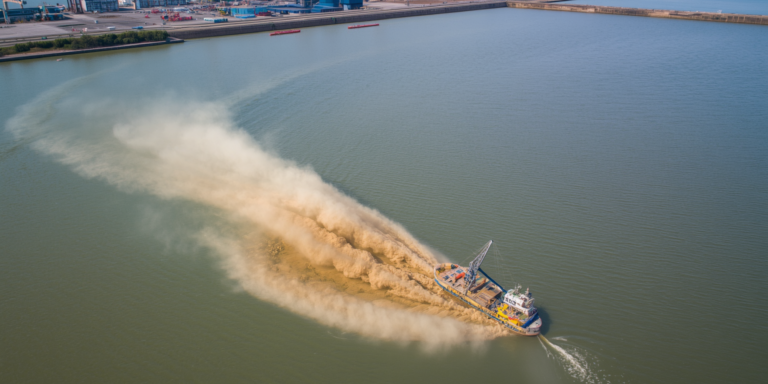
During dredging and marine construction projects, sediment disturbance is unavoidable. When seabed materials are excavated, fine particles such as silt and clay become suspended in the water, creating turbidity that can spread far beyond the work area if not controlled.
Understanding how sediment spreads is essential for protecting marine environments and maintaining regulatory compliance.
How Sediment Spreads in Water
Sediment dispersion depends on several environmental factors:
- Water currents carry fine particles over long distances
- Wave action keeps sediment suspended in the water column
- Tides move sediment back and forth across project sites
- Particle size affects how quickly sediment settles (fine silt travels farther than sand)
- Dredging methods can increase suspended solids in the water
If not controlled, suspended sediment can reduce water quality, harm marine habitats, and impact nearby coastlines.
Controlling Sediment with Geoboom Silt Curtains
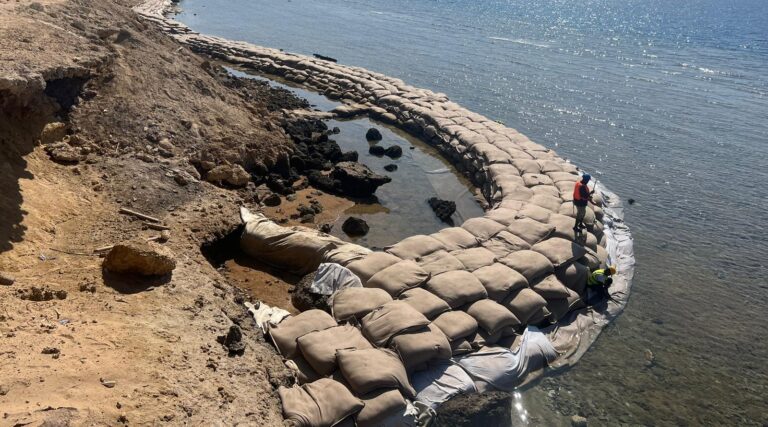
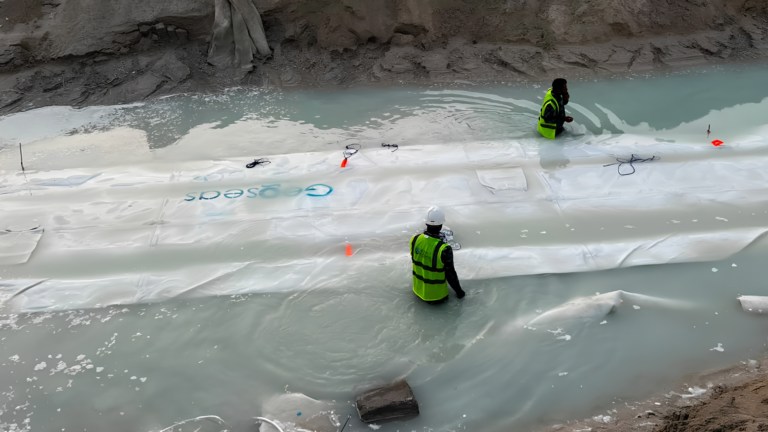
Geoseas provides Geoboom Silt Curtains, designed to contain suspended sediment within the dredging or construction area.
Silt curtains act as floating barriers that:
- Contain turbidity within the work zone
- Allow sediment to settle naturally
- Protect surrounding marine environments
- Help projects comply with environmental regulations
These curtains are widely used in dredging, reclamation, coastal construction, and marine infrastructure projects.
Sediment spread during dredging and construction is driven by currents, waves, and sediment type, but it can be effectively controlled using proper containment systems like Geoboom Silt Curtains. Implementing sediment control solutions helps protect marine ecosystems, maintain water quality, and ensure smooth project operations.