
Marine environments present some of the most demanding conditions for engineering solutions. From strong hydrodynamic forces to strict environmental regulations, marine protection projects require precision, experience, and a lifecycle-driven approach.
At Geoseas, marine protection goes beyond supplying products. Each project follows a structured engineering lifecycle, from feasibility and modeling to manufacturing, installation, and long-term performance, ensuring reliable, sustainable, and cost-effective solutions.
Feasibility & Modeling
Every marine protection solution begins with a thorough feasibility assessment. This phase ensures the selected system performs effectively under real marine conditions.
Key engineering inputs include:
- Water depth, currents, tides, and wave action
- Seabed conditions and sediment transport
- Environmental sensitivity and regulatory requirements
- Project objectives such as erosion control, pollution containment, safety, or security
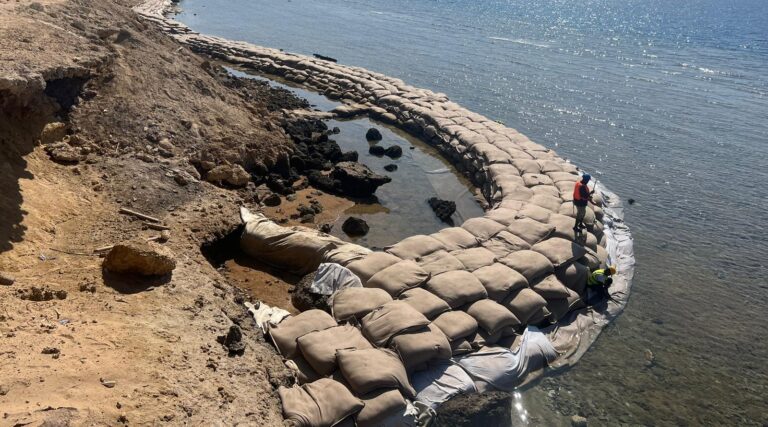
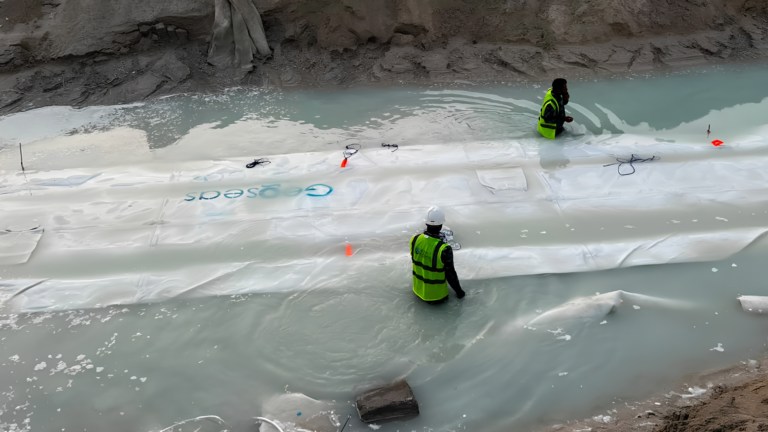
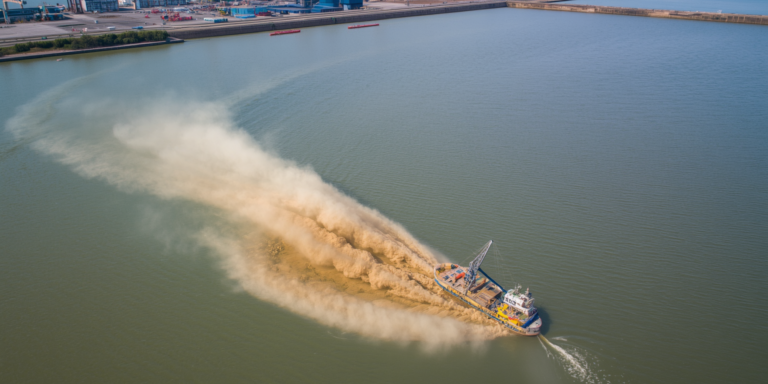
Using engineering calculations and hydrodynamic modeling, Geoseas evaluates system behavior under load, stability requirements, and anchoring forces. This enables accurate specification of solutions such as silt curtains, oil spill booms, geotubes, floating breakwaters, swimming barriers, and marine nets.
Manufacturing
Once the design is validated, projects move into manufacturing, where engineering precision meets marine-grade materials.
Marine protection systems must withstand:
- UV exposure and saltwater corrosion
- Continuous mechanical stress
- Long-term deployment in harsh environments
Geoseas manufactures using high-performance geotextiles, reinforced fabrics, corrosion-resistant hardware, and marine-certified components, with strict quality control at every stage.
Manufacturing highlights:
- Custom-built dimensions based on project design
- Strength, seam, and durability testing
- Compliance with international marine and environmental standards
Installation & Long-Term Performance
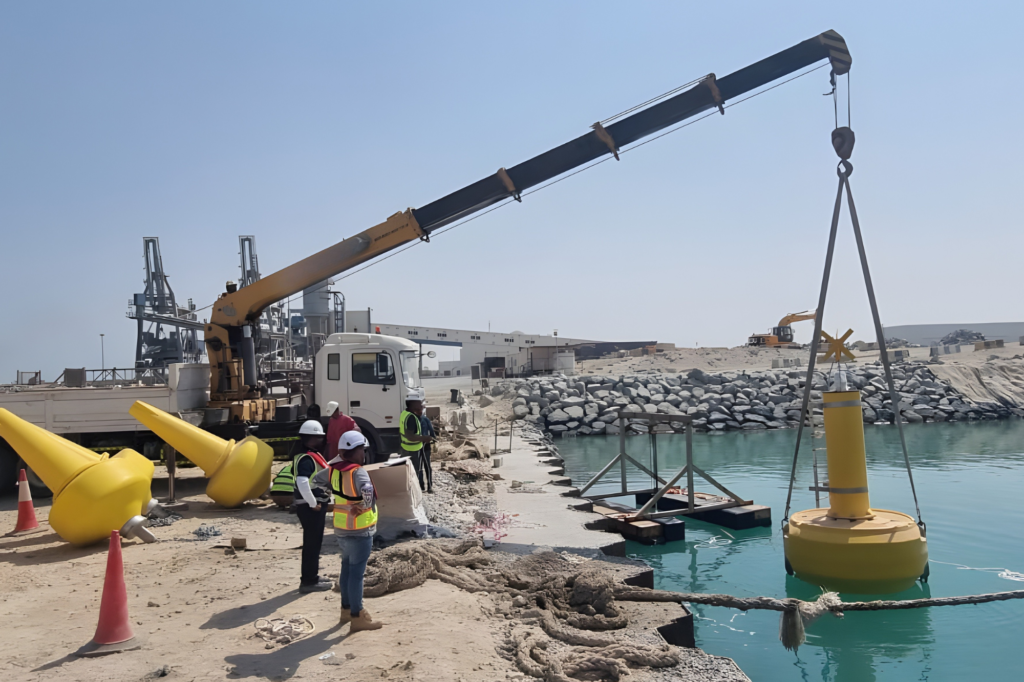
Proper installation is critical to the success of any marine protection project.
Installation planning includes:
- Marine logistics and site access
- Anchoring and mooring design
- Environmental impact mitigation during deployment
- Coordination with marine contractors and consultants
Geoseas supports installation through technical documentation, installation drawings, and on-site or remote engineering guidance, ensuring correct deployment even in complex marine environments.
Long-term performance considerations:
- Resistance to fatigue, abrasion, and extreme weather
- Structural stability over time
- Ease of inspection, maintenance, and replacement
- Adaptability to changing project requirements
This lifecycle-focused approach reduces operational costs and extends system lifespan.
From design and modeling to manufacturing, installation, and long-term performance, marine protection projects demand an integrated engineering approach.
At Geoseas, every solution is engineered as a complete system, delivering reliable performance, environmental compliance, and long-term value for coastal and offshore projects worldwide.
Talk to our team to design your next marine protection solution.